The Click Is Dying: What Zero-Click Search Means for B2B Demand Generation in 2026
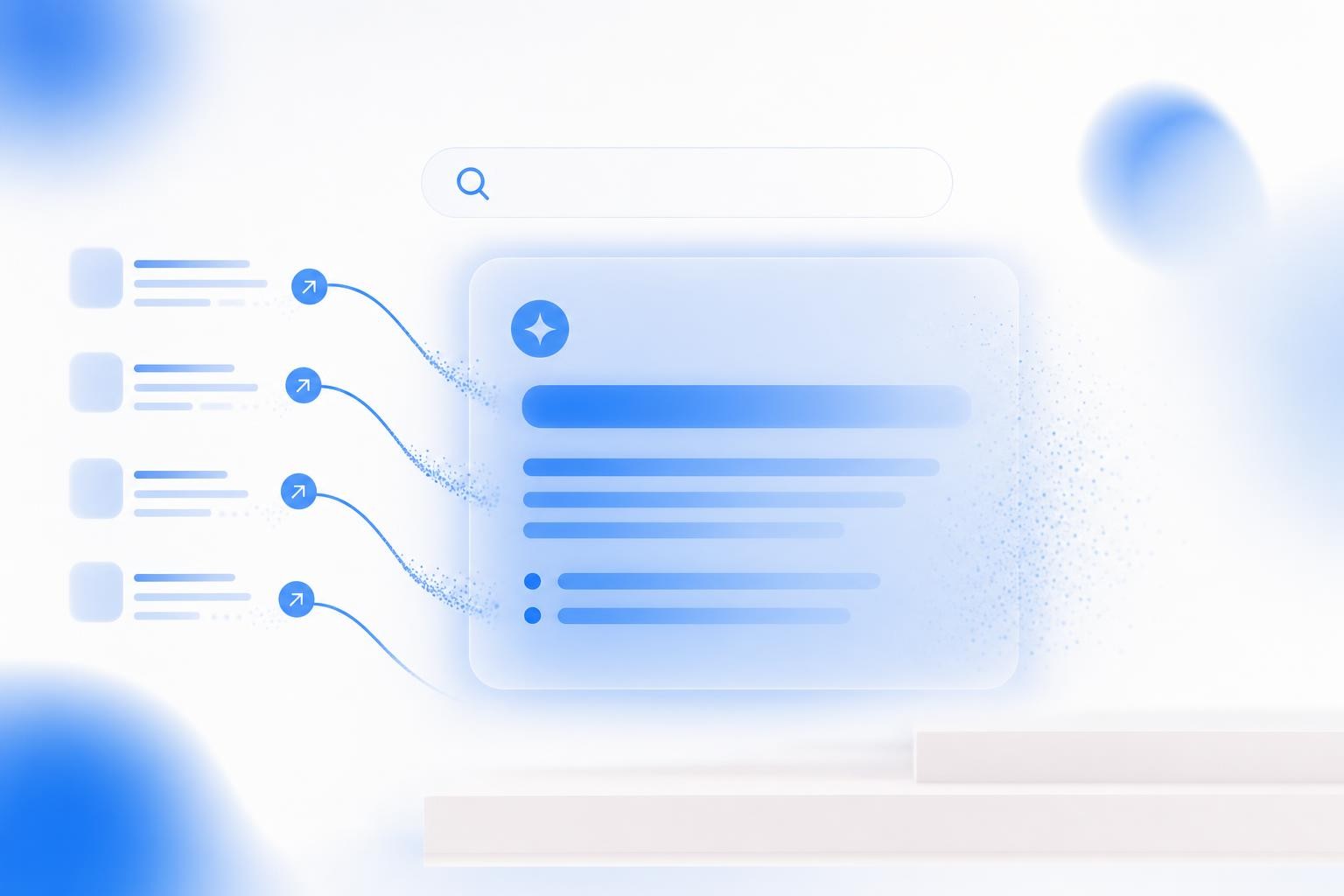
For twenty years, the click was the atomic unit of B2B demand generation. You ranked, buyers clicked, sessions accumulated, MQLs appeared, pipeline followed. The whole machine - content calendars, SEO budgets, attribution models, quarterly reports - was built on that chain of causation.
That chain is breaking.
Not gradually. Not theoretically. Right now, in Q2 2026, with data from multiple independent research programs pointing at the same structural shift.
Google AI Mode crossed 100 million monthly active users across the US and India in 2025, and adoption has kept climbing since. That platform now processes over 1 billion queries per month, handling more monthly queries than Perplexity and ChatGPT Search combined. And the number that should stop every demand-gen leader in their tracks: Seer Interactive analyzed 25.1 million impressions and found that 93% of AI Mode queries produce zero outbound clicks. Users read the AI-generated answer and leave.
This isn't a niche behavior. It's the mainstream search experience for a rapidly growing share of your buyers.
The Numbers That Break the Old Model
Let's be precise about what's happening, because the data is more nuanced than the headlines suggest.
There are two distinct AI surfaces on Google, and they behave differently:
- AI Overviews sit above traditional blue-link results on the standard search page. They carry an 83% zero-click rate.
- AI Mode is a fully conversational interface - a separate tab where the entire search experience is restructured around AI-generated answers. The 93% zero-click rate inside AI Mode comes from Seer Interactive's 25.1M-impression study. That figure is higher than the AI Overviews zero-click rate for a structural reason: AI Mode is a conversational interface. Users enter AI Mode specifically to have extended AI-driven exploration.
B2B tech queries trigger AI Overviews 82% of the time, up from 36% just twelve months earlier, according to BrightEdge data tracking AI Overview presence across industry-specific keyword sets. B2B Tech moved from 36% to 82% AIO presence over the year - a gain of 46 percentage points. Technology is inherently explanatory; enterprises and procurement professionals searching for software solutions, infrastructure comparisons, and emerging technology concepts generate the kind of informational queries that AI Overviews handle effectively.
That means four out of five searches your buyers run in your category now encounter an AI-generated answer before they see your organic listing.
The causal evidence is now in. A randomized field experiment confirmed AI Overviews reduce outbound organic clicks by 38% on triggered queries, with zero-click searches rising from 54% to 72%. Effects were strongest when AI Overviews appeared at the top of the page, which occurred 85% of the time.
Google search referral traffic to over 2,500 publisher sites fell 33% globally and 38% in the United States between November 2024 and November 2025, according to Chartbeat data cited in the Reuters Institute Digital News Report. Google referrals are already falling. Chartbeat data shows organic Google search traffic down 33% globally from November 2024 to November 2025, and down 38% in the U.S. over the same period. AI Overviews are a major factor.
Meanwhile, paid search has grown more expensive year-over-year, with B2B keywords seeing some of the steepest cost increases. Organic clicks shrink. Paid clicks cost more. The squeeze is coming from both directions.
Why This Specifically Breaks B2B Demand Gen
The click-based funnel has a specific architecture: awareness content drives traffic -> traffic converts to leads -> leads enter nurture -> pipeline emerges. Every stage depends on the click happening.
When clicks don't happen, the funnel doesn't just slow down. It becomes invisible.
Here's the structural problem. AI-mediated research is the dark funnel on a much larger scale. When a buyer asks an AI tool about your category and gets a synthesized answer, that interaction doesn't show up in your analytics. No session. No referral source. No content view. The buyer may have spent 30 minutes researching your company through an AI tool and you'd have no record of it.
This isn't a tracking problem you can solve with better attribution. It's a structural shift in where buyer decisions form.
G2's 2026 survey of B2B software buyers found that a majority now begin their purchasing process in an AI chatbot rather than a traditional search engine - a sharp rise over the prior year. A large share of buyers said they chose a different software vendor than they initially planned based on AI chatbot guidance, and a meaningful portion purchased from a vendor they had never heard of before.
Read that last point again. A significant share of B2B software deals went to a vendor the buyer had never heard of - because AI surfaced them. That's not a click-based outcome. That's a citation-based outcome.
Vendor selection is largely decided before sellers are engaged. Early in the journey, buyers already shortlist roughly four or five vendors - nearly all of whom they've had prior exposure to - and ultimately purchase from that list the large majority of the time. Sellers enter late, and only on the buyer's terms. Buyers delay contact until well into their journey, initiate outreach themselves most of the time, and overwhelmingly reach out first to the vendor they intend to buy from.
The shortlist is being assembled in AI conversations your analytics will never see. If your brand isn't in those conversations, you're not losing clicks - you're losing deals you never knew were in play.
The attribution problem compounds this. Your Google Search Console may show impressions holding steady or even rising. But clicks and CTR are falling. Revenue from organic isn't keeping pace with traffic. Teams that report on sessions and MQLs are measuring a shrinking sliver of buyer attention and calling it the whole picture.
The measurement gap is real and growing. If your demand gen reporting is built entirely around sessions, clicks, and form fills, you are measuring the visible fraction of a buyer journey that increasingly happens in AI answers, peer conversations, and dark-funnel channels. The pipeline impact of that invisible activity won't show up until deals close — or don't.
What Doesn't Change: Buyers Still Buy, Humans Still Close
Before this becomes a doom spiral, let's be honest about what the data actually says.
Buyers haven't stopped buying. They haven't stopped talking to sales. The purchase still happens. What's changed is where the research happens and when the shortlist forms.
69% of B2B buyers prefer to validate AI-generated insights with sales reps, according to a Gartner survey of B2B buyers conducted in 2025. The survey found that B2B buyers are increasingly using a mix of digital channels, AI, and human interactions throughout the purchase process. Buyers reported using multiple information sources during a recent purchase, and a large share said they used GenAI, primarily to gather information on vendors and products.
These findings point to a more nuanced buying environment: buyers want the speed and convenience of digital and AI-assisted research, but they still rely on sales reps when they need reassurance, context, and decision support. Reps remain the most important information source when buyers are researching a business problem or need, identifying a preferred supplier and securing internal support, and finalizing the purchase.
The human close still matters. What's changed is the pre-close phase. AI handles the research and shortlist formation. Humans handle validation and final decision. That means your marketing job is no longer to drive clicks into a funnel - it's to be present and credible in the AI research phase so that your brand is on the shortlist when the human conversation begins.
There's also a genuine upside signal buried in the data. AI-referred traffic tends to convert better than standard organic search because visitors arrive already informed and further along in their buying decision. The clicks that do happen from AI citations are higher-quality. The problem isn't that the channel is dead - it's that the measurement and optimization logic of the old channel no longer applies.
Some traffic loss is also simply unrecoverable. Informational content that answered questions AI can now answer fully - "what is X," "how does Y work" - will not return to pre-2024 click levels. That's not a failure of execution; it's a structural change in what search is for. The honest move is to acknowledge it and redirect budget accordingly.
The Strategic Shift: From Ranking to Being Named
The new competitive question isn't "do we rank for this keyword?" It's "does AI name us when a buyer asks about our category?"
Pages cited in AI Overviews earn roughly 120% more organic clicks per impression than uncited pages on the same queries, according to Seer Interactive. Being cited doesn't just protect you from traffic loss - it actively multiplies the traffic you receive from the queries where AI answers appear.
The overlap between top-10 Google rankings and AI Overview citations has fallen sharply over the past year, meaning high rankings no longer guarantee AI visibility. You can rank first and still be invisible in the AI answer. You can sit in position six and be the only brand cited. These are now separate problems requiring separate strategies.
Analyses of large keyword sets find that only a minority of pages cited in AI Overviews appear in the top 10 results for the same query, a steep drop from a year earlier. A page sitting in positions six through nine for a broad query can be cited in AI Overviews for a specific subtopic within that query, because its content directly answers a specific question better than anything above it.
This changes how you brief content. The question is no longer "what keyword does this target?" It's "what specific question would a buyer ask an AI, and is our answer the clearest, most credible one available?"
What earns citations:
- Original data and proprietary research. AI engines prefer content containing specific statistics and named findings. Generic educational content is increasingly commoditized.
- Structured, direct answers. Content near the top of the page is more likely to be cited. Retrieval systems pull a limited number of passages per URL, and content near the top of the page is more likely to make the cut.
- Topical depth, not keyword breadth. When AI Mode issues multiple sub-queries per user prompt, your domain has many chances per session to be cited rather than one rank position. Comprehensive topical coverage beats thin keyword targeting.
- Third-party corroboration. Brands are far more likely to be cited through third-party sources than their own domains. Earned media, review site presence, and analyst mentions feed AI citation pools more reliably than your own website.
The Reallocation Checklist
This is where the analysis has to become operational. Here's what the shift actually requires from a B2B demand-gen team:
Run your top 30 commercial queries through Google (logged out), ChatGPT, and Perplexity. Note which queries trigger AI answers and whether your brand appears in them. This is your baseline. If you're not tracking citation share by query cluster, you're flying blind on the most important visibility metric of 2026.
Sessions and organic clicks will continue declining on informational queries — that's structural, not fixable. Replace or supplement them with: branded search volume (a proxy for mental availability), AI citation rate across your key query clusters, and pipeline influenced by AI-cited pages. These are leading indicators of shortlist presence.
Cut or deprioritize generic 'what is X' educational content that AI can now answer fully. Invest in: original research with proprietary data, specific comparison content ('X vs Y for [use case]'), implementation guides and case studies with real numbers, and content that takes a clear, evidenced position. Vague both-sides content is less likely to be cited.
AI engines cite earned media more reliably than vendor websites. That means: active review management on G2 and Capterra, thought leadership placed in industry publications your buyers read, and structured data on your own site so AI crawlers can parse your claims cleanly. Your review presence directly affects whether AI can confidently recommend you.
Paid CPC is rising (up 12% YoY to $2.96 average in Q1 2026) while organic clicks shrink. Reallocate some top-of-funnel content spend toward GEO (generative engine optimization) and brand-building activities that influence AI citation pools. Paid still works for high-intent transactional queries — but the informational top-of-funnel is increasingly better served by citation strategy than by paid clicks.
Since 69% of B2B buyers validate AI-generated insights with sales reps (Gartner), your sales team needs to be equipped to confirm and contextualize what AI told the buyer — not to deliver information the buyer already has. That means sales enablement built around 'what did AI say about us, and what's the nuanced truth' rather than standard product decks.
The Honest Assessment
Some of what's happening is recoverable. Being cited in AI answers is an engineerable outcome - it rewards the same fundamentals that always made content good: specificity, original data, clear structure, genuine authority. Teams that invest in those things will earn citation share.
Some of it isn't recoverable. The broad informational content library that drove top-of-funnel traffic for the last decade will not return to 2022 click levels. That traffic moved into AI answers. The right response is not to rebuild it harder - it's to redirect that budget toward content that earns citations and toward the dark-funnel channels where shortlists actually form.
The measurement gap is the most urgent problem. The companies that build citation tracking infrastructure in 2026 will be measuring this value shift in real time. Those that don't will be measuring the wrong things while their pipeline silently shifts to competitors who show up in the AI answer.
The click was a useful proxy for buyer attention for twenty years. It's still useful - just for a smaller and shrinking share of buyer attention. The teams that adapt their measurement, their content strategy, and their budget allocation to that reality will compound. The teams that keep optimizing for sessions on a shrinking base will keep wondering why pipeline feels harder than the numbers suggest.
What This Means for Your GTM Motion
The B2B demand gen playbook is being rewritten around one question: are you named in the answer?
Not ranked. Named. Cited. Present in the AI conversation that happens before your buyer ever visits your website, fills out a form, or talks to your sales team.
The companies that appear credibly in AI answers when buyers ask category-level questions about their market get considered. The companies that don't get filtered out before any human conversation starts. The buyer's AI research has already shortened the list, established relative credibility levels, and shaped framing before a sales rep sends the first email.
That's the new demand generation reality. The click isn't dead - but it's no longer the unit of measure that matters most.
Nukipa engineers your B2B go-to-market to be visible where buyers research — in Google, in AI Overviews, and inside the AI answers that build vendor shortlists before your sales team gets the call.
See How Nukipa Builds AI-Visible GTM MotionsRelated
96% of B2B Marketers Use AI. Only 44% Have Data Good Enough to Run It.
A 52-point gap sits between AI adoption and data readiness in B2B. It's the reason most AI marketing automation underdelivers - and the fix is a context layer, not another tool.
Intent Data Just Moved Out of the Dashboard and Into the Workflow. Now Someone Has to Govern It.
Intentsify pushing 1.1 trillion monthly intent signals into Clay workflows is a small announcement with a big consequence: intent now triggers real work automatically, and lean GTM teams own the rules.
How Many Prompts Should You Actually Track for AI Visibility? The Sample-Size Math Most GEO Dashboards Skip
Your GEO dashboard's line went up. That doesn't mean anything yet. Here's the sample-size math behind AI visibility tracking - how many prompts, how many runs, and how long before a change is real.