HubSpot Just Democratized Agent-Building. Here's What Lean GTM Teams Should Do About It.

On July 23, 2026, HubSpot quietly shifted the floor for every B2B marketing team running on its platform. Not with a new feature buried in a changelog - with a structural change to how AI agents are built, managed, and held accountable. If you're a one-to-five-person GTM team, this matters more to you than it does to enterprise. Here's why, and what to do about it.
What Shipped on July 23
HubSpot launched Agent Hub and Agent Builder in public beta on July 23, 2026, for all Professional and Enterprise customers. The two tools are distinct but connected:
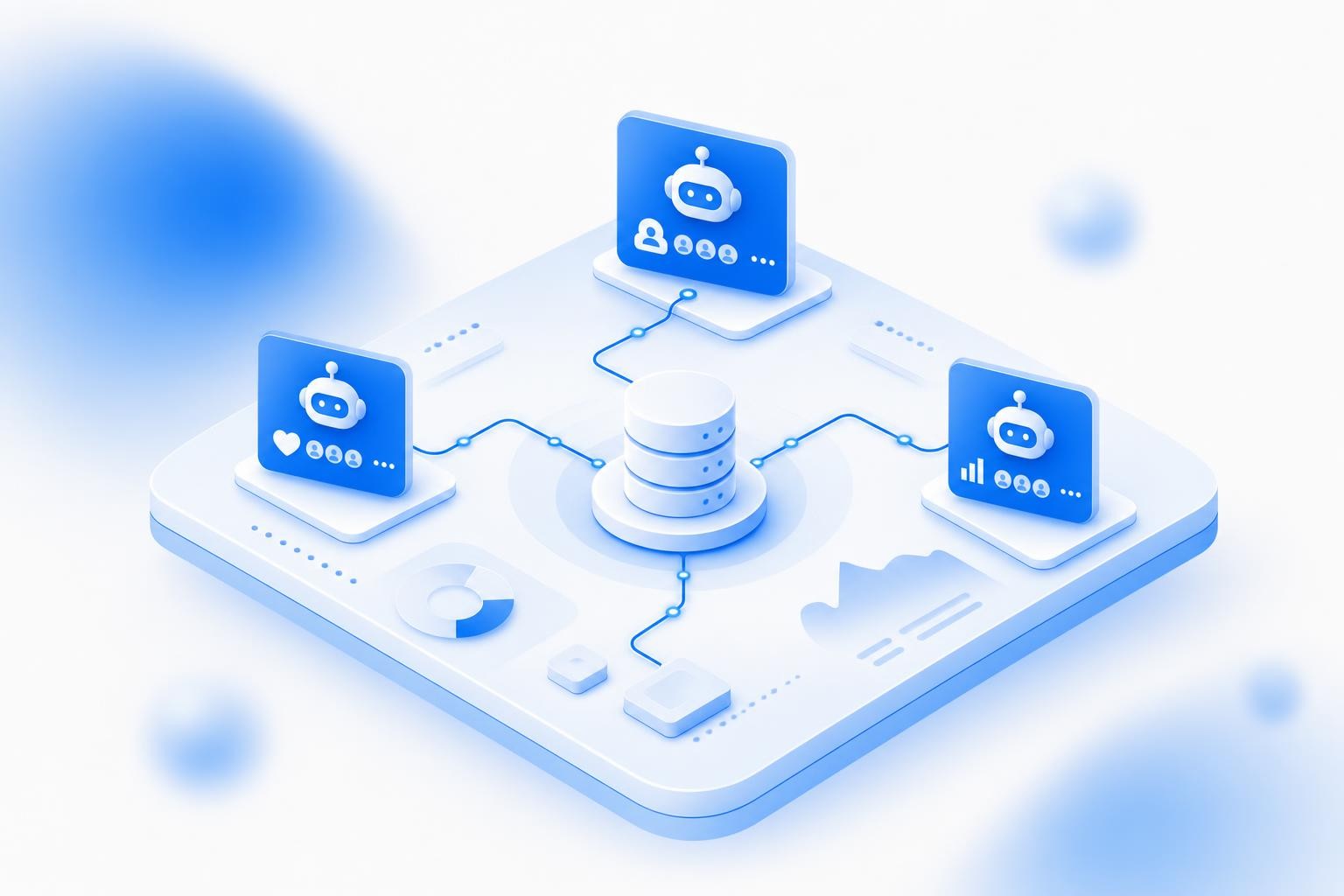
- Agent Hub is a management console - one place to see every active agent's live status and recent results, surface dormant agents for one-click activation, access an Agent Marketplace, and organize outcomes by go-to-market goal (building demand, winning deals, delighting customers, scaling growth).
- Agent Builder is a no-code canvas where you describe what you need in plain language using the Breeze Assistant, and the platform assembles the agent using data already in your CRM - deal history, contact records, call transcripts, buying signals - with no separate setup or field mapping required.
Pricing is straightforward: Agent Hub is included for Professional and Enterprise tiers. Custom agents built in Agent Builder run on HubSpot Credits when they perform configured actions, with credits included at those tiers and options to buy more if needed.
What Agent Hub and Agent Builder Actually Do
The problem HubSpot is solving isn't a capability gap - it's a coordination gap. Most teams running AI agents today have them scattered across tools and workflows, each operating in its own silo.
HubSpot named the failure mode directly: a sales prospecting agent contacts a customer the same week a service agent is handling an open complaint from that same account, with neither agent aware of the other. That's not a hypothetical. It's what happens when agents share a CRM but not a context layer.
Agent Hub fixes the visibility side: administrators can review execution logs, track performance across teams, and confirm agents operate within company guidelines from a single workspace. Agent Builder fixes the creation side: non-technical staff can assemble agents using their own prompts, knowledge sources, and the CRM data already in HubSpot - no engineering support required.
The real-world proof point HubSpot cites is Ignite Reading, a virtual literacy tutoring program. Ignite Reading built a custom agent using Agent Builder that automatically finds and parses each school district's academic calendar using the domain and school year already stored in their deal record - a task that previously took 15-20 minutes per district now takes seconds, saving more than 350 hours a year.
That's not autonomous selling. It's a repetitive research task eliminated. The value is real; the mechanism is mundane. That's exactly the right place to start.
Why This Matters More for Lean Teams Than for Enterprise
Here's the shift that's easy to miss: agent-building is now commoditized inside the platform. You no longer need a RevOps engineer, a developer, or a separate automation tool to spin up a custom agent. That's a meaningful unlock for a three-person GTM team.
But it also means the moat has moved.
87% of marketers now use generative AI in at least one recurring workflow, up from 51% two years earlier. Yet adoption hasn't translated into results for most teams - only a minority of organizations report extracting real bottom-line value from it. The gap isn't access to tools. It's how those tools are connected and directed.
For lean teams, two questions now determine whether Agent Hub is a genuine advantage or just more noise:
1. Do your agents share context? The whole premise of Agent Hub is that agents working from the same CRM data don't step on each other. If your sales, service, and marketing motions all run from one HubSpot instance, you're already positioned to benefit. If your data is fragmented across tools, adding more agents just multiplies the coordination problem.
2. Can buyers find you before your agents find them? This is the question most teams skip entirely - and it's the one that determines whether your agents have anything to work with.
| Capability | Old moat (2024) | New moat (2026) |
|---|---|---|
| Agent access | Requires dev/RevOps | No-code, included in Pro/Enterprise |
| Agent coordination | Manual, tool-by-tool | Unified via Agent Hub console |
| Competitive edge | Having agents at all | Agents sharing context + brand visible in AI search |
| Demand creation | Agents can prospect | Agents can't create demand that doesn't exist |
| AI search visibility | Optional / ignored | Table stakes for inbound to exist |
The One Thing Agents Can't Do for You
Here's the part of the HubSpot announcement that nobody is talking about.
Agent Hub makes it easier to run outbound prospecting agents, service agents, and content agents. All of those work the demand that already exists. None of them create it.
When a buyer starts researching your category today, they're not just Googling. They're asking ChatGPT, Perplexity, and Google's AI Overviews. If your brand doesn't appear in those answers, your agents are chasing buyers who've already shortlisted your competitors. A prospecting agent reaching out cold to someone who's never heard of you is a much harder motion than one following up with a buyer who already encountered your brand in an AI-generated answer.
This isn't a knock on Agent Hub - it's a structural reality. Agents work the pipeline. They don't build the brand that fills it.
The visibility gap is real. Google AI Overviews now appear in roughly 48% of searches, and zero-click searches account for 58–69% of all searches. If your brand isn't cited in AI-generated answers, you're invisible at the top of the funnel — before any agent ever gets a chance to engage.
The teams actually pulling ahead aren't just running more agents. They've redesigned their entire GTM motion around AI - including how buyers discover them in the first place.
A Practical Checklist for Lean Teams Evaluating Agent Hub
You don't need to activate everything on day one. Here's how to approach it without wasting credits or creating new coordination problems.
Agent Hub surfaces agents you already have but haven't activated. Start there — not with a custom build. Find the repetitive research or data-entry task your team does manually every week where the inputs already live in HubSpot. That's your first agent.
Before adding more agents, confirm your CRM data is clean and centralized. Agents running on fragmented or stale data don't coordinate — they just fail faster. One source of truth for contacts, deals, and accounts is the prerequisite, not the outcome.
Agent Hub organizes outcomes by GTM goal. Use that. Don't measure your prospecting agent by emails sent — measure it by meetings booked and pipeline influenced. If you can't trace agent activity to a commercial outcome, you're optimizing noise.
Your agents work the demand that exists. Build the system that creates it: content that gets cited in AI answers (GEO), not just indexed by Google. Buyers who already know your brand convert at a different rate than cold outreach targets.
Is Agent Hub Right for Your Team Right Now?
Not sure where to start? Use this quick evaluator to see whether Agent Hub is a priority move or a later-stage addition for your team.
Where Nukipa Fits
Agent Hub is a genuine step forward for lean teams. But it solves the coordination problem inside your CRM - it doesn't solve the visibility problem outside it.
Nukipa runs the full lean-team GTM motion as one connected system: strategy, content, AI-search visibility (GEO), and pipeline - all from a single context layer that every channel works from. That means your HubSpot agents have coordinated CRM data to act on and a brand that actually shows up when buyers research your category in ChatGPT, Perplexity, and Google's AI answers.
Agents without AI visibility are chasing cold demand. Agents with it are following up on buyers who already know you exist.
Strategy, GEO visibility, and pipeline — operated as one system for lean B2B teams.
See How Nukipa Runs the Full MotionRelated

Google AI Mode Cut Clicks by 18.8 Points in a Randomized Study. Search Console's New AI Report Can't Tell You Where You Stand.
A preregistered randomized study found Google AI Mode cut click-through to external sites by 18.8 points, while Search Console's new AI report still has no clicks and no position. What B2B teams can and can't measure.

ChatGPT Ads Are Seven Months Old and Still Stuck at Test Budgets. Here's the Measurement Checklist Before You Spend.
Seven months after launch, ChatGPT ads still sit at test budgets because measurement doesn't hold up: click counts that disagree 5:1, conversions that never show, and tracking terms legal teams won't sign. Here's the checklist a lean B2B team needs before spending.
51% of B2B Software Buyers Now Start Research in a Chatbot. Your Analytics Sees None of It.
G2's 2026 buyer survey: 51% of B2B software buyers now start research in an AI chatbot, 69% switched their vendor pick based on what it said, and none of it shows up in your analytics. Here's why the AI dark funnel is structurally different from the old one, and what to do about it.